history
Nearly half of all the spindle whorls found from the Viking age (Norway) are made from soapstone (Arne Skjølsvold: Klebersteinindustrien i vikingtiden. p. 30). Soapstone whorls from this period average between 3 and 4 centimeters in diameter and weigh around 30g depending on the size and density of the soapstone, though much larger, and smaller, examples exist.
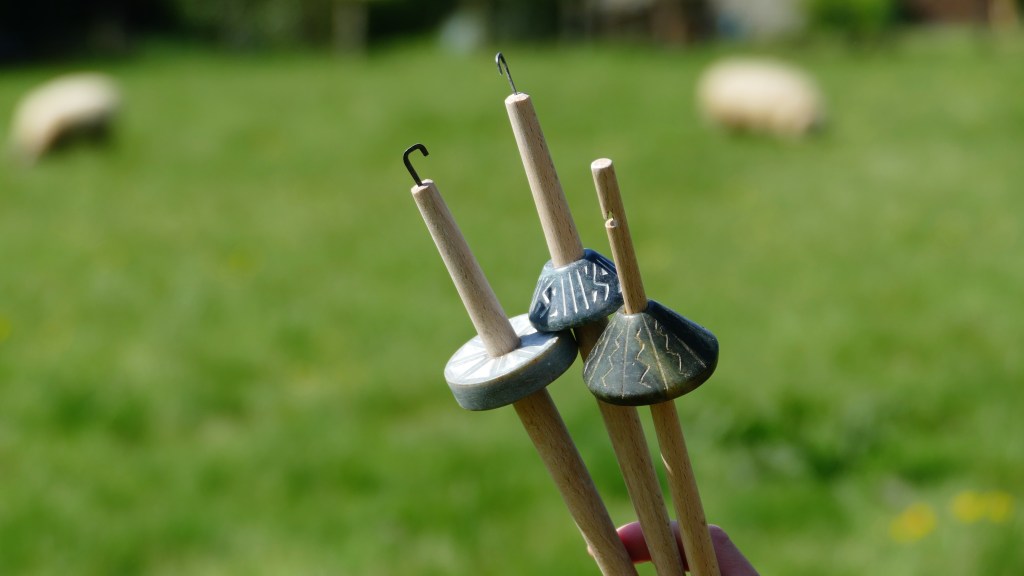
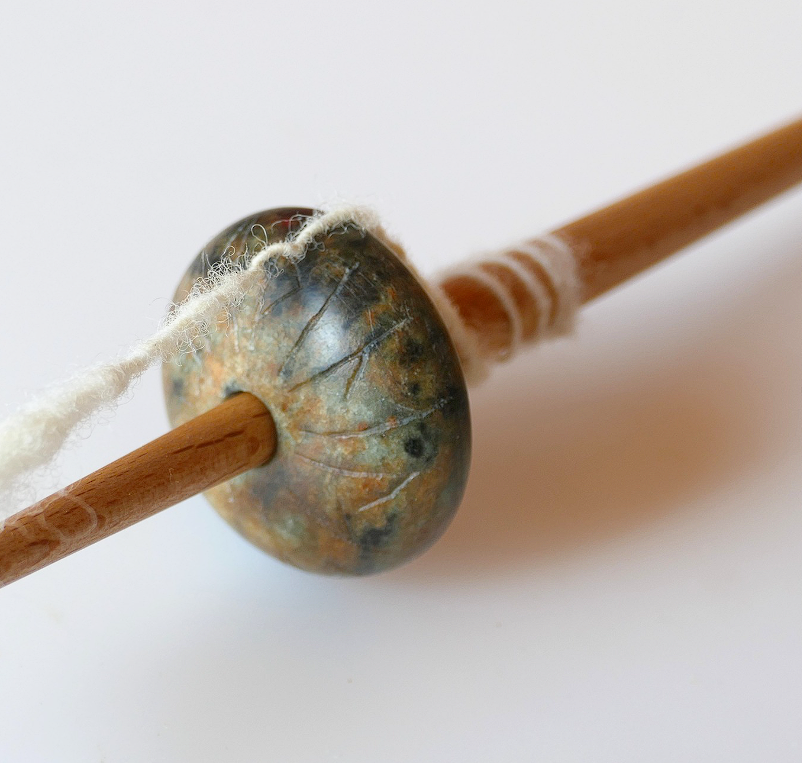
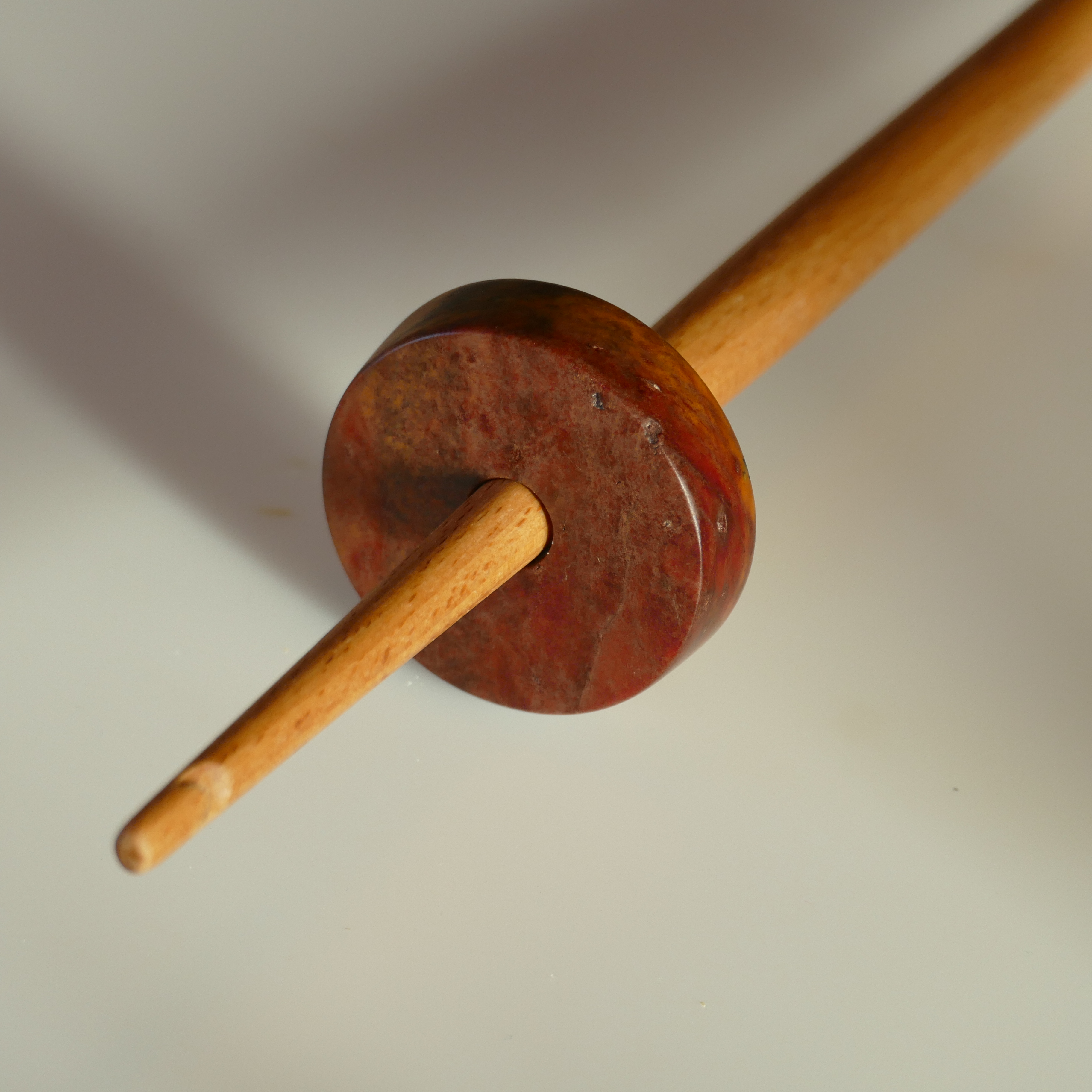
Spindle whorls are slid onto the end of a thin stick, either on the top or bottom end, and serve to provide kinetic energy to the spinning of wool, similarly attached to the stick. This movement allows spinning the wool in order to make thread. The choice of the whorl (diameter, mass, etc.) determines the characteristics of the resulting thread/yarn
.
historical examples
It is possible to view many of the soapstone whorls, on the Unimus website (here) which combines the databases of several Norwegian university archives.
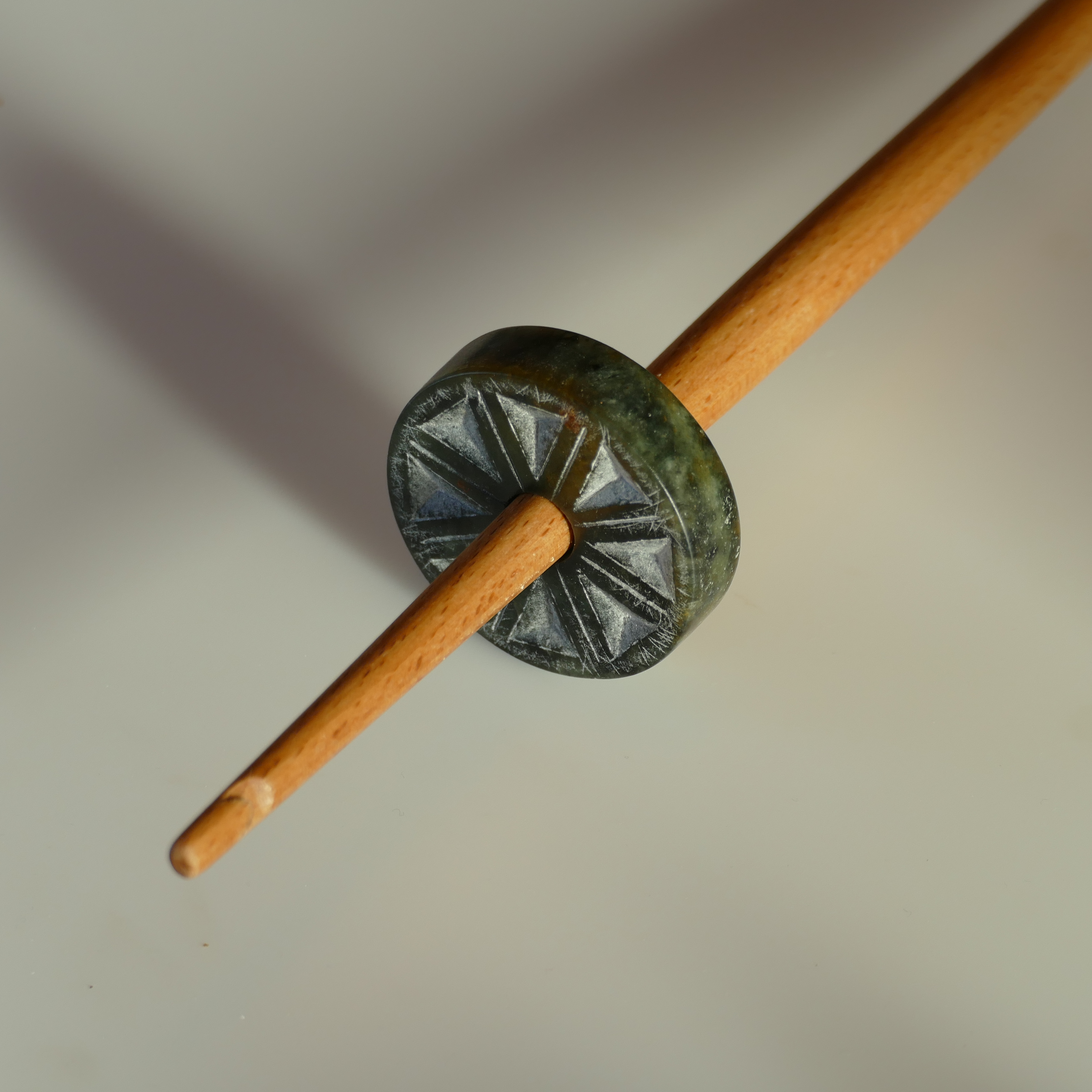
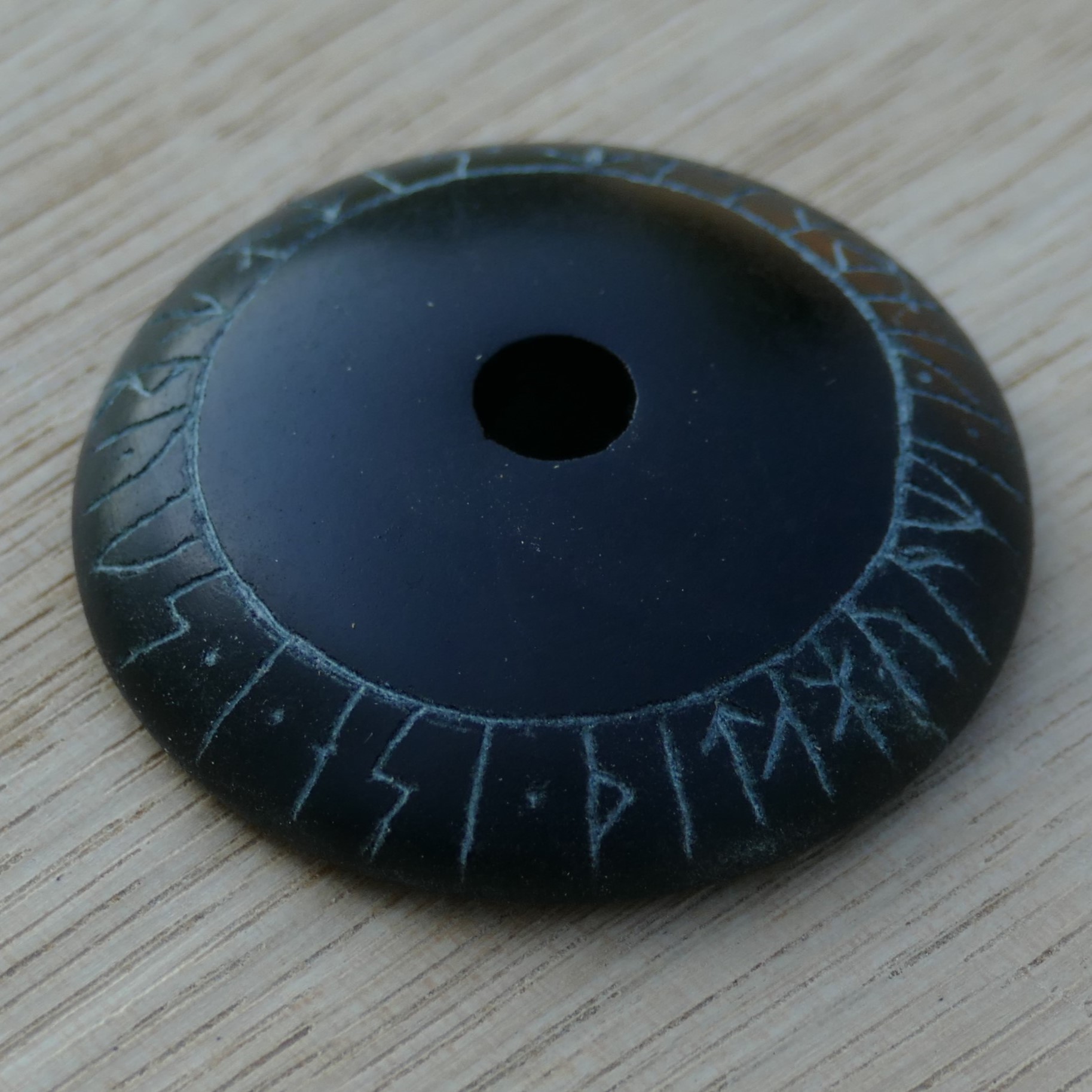
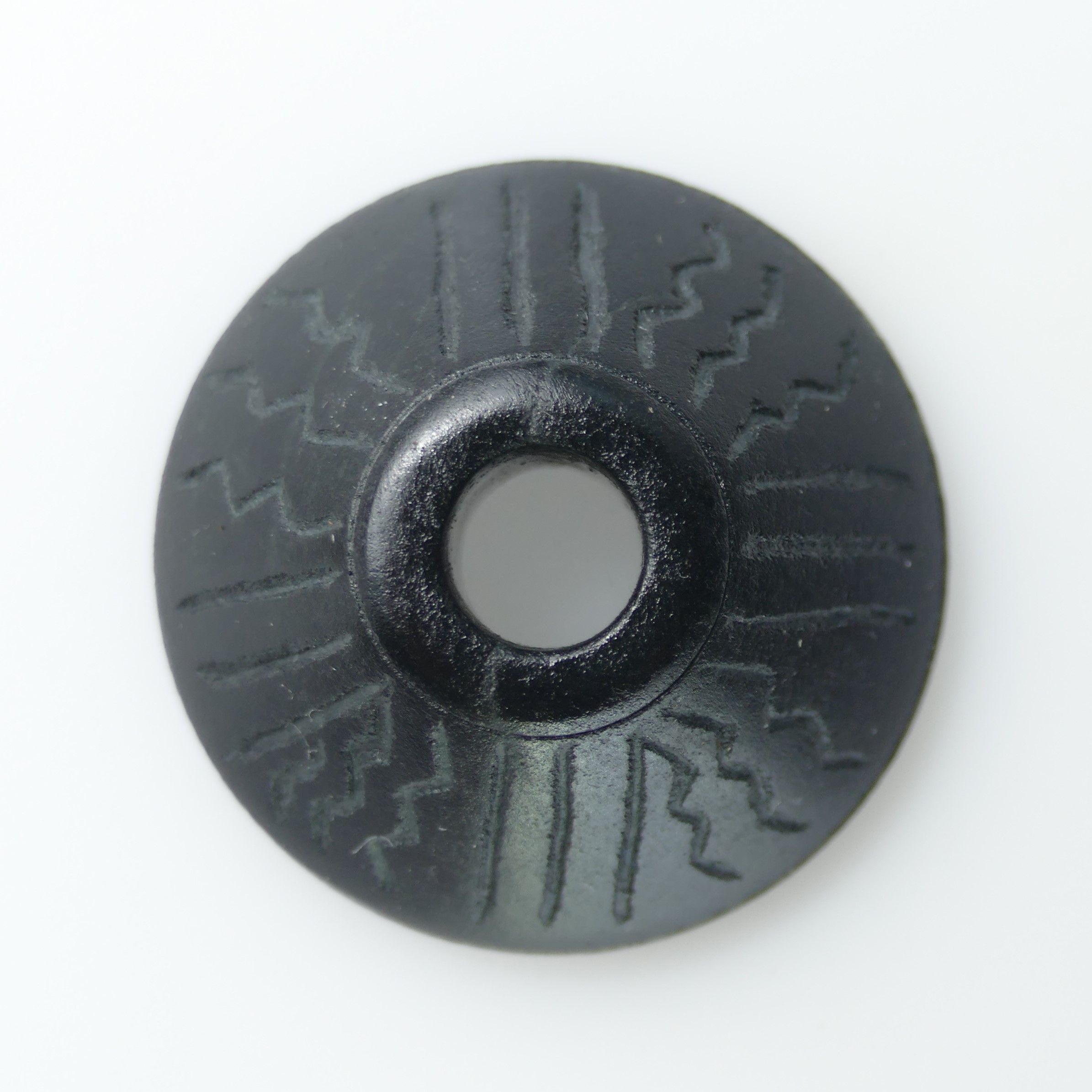
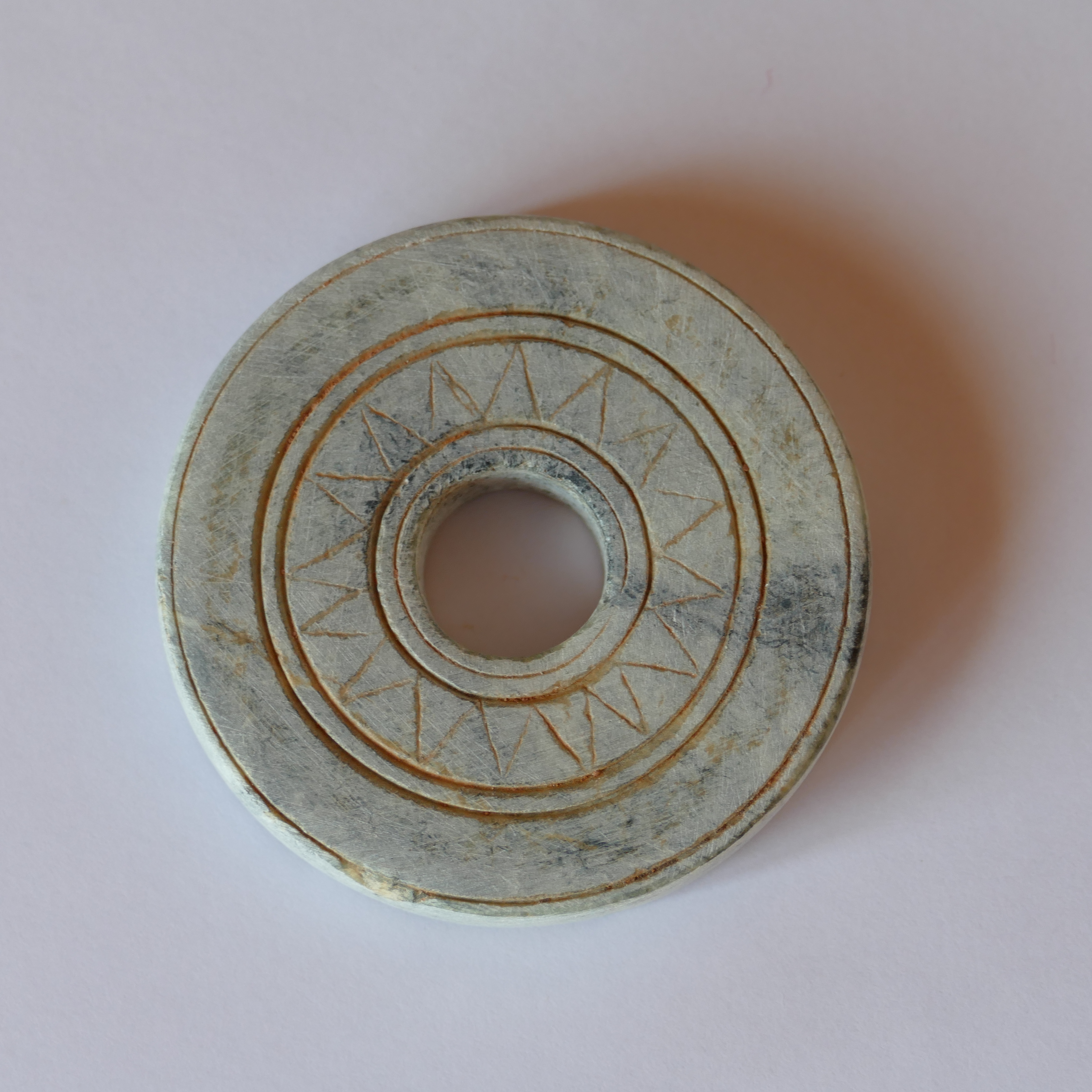
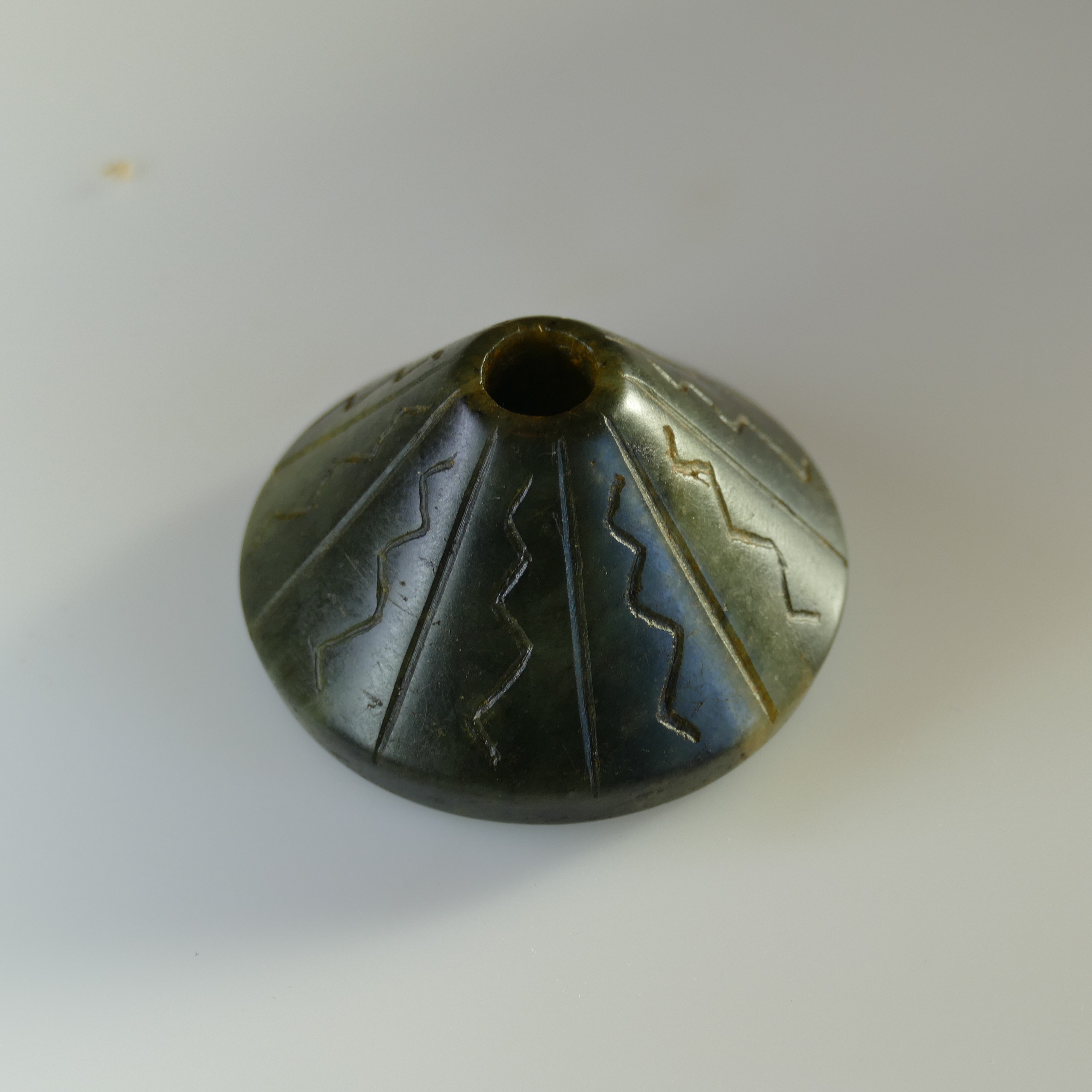
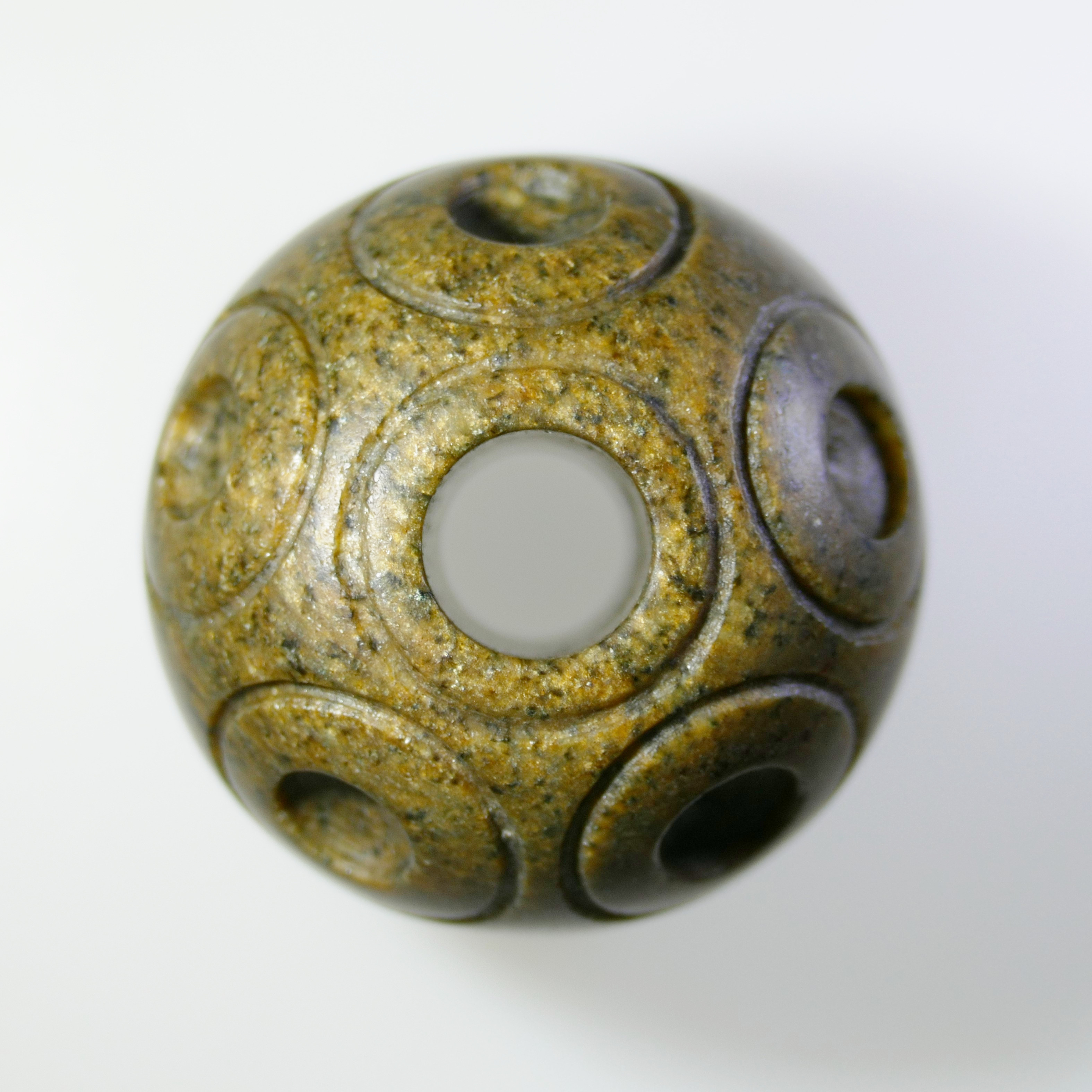
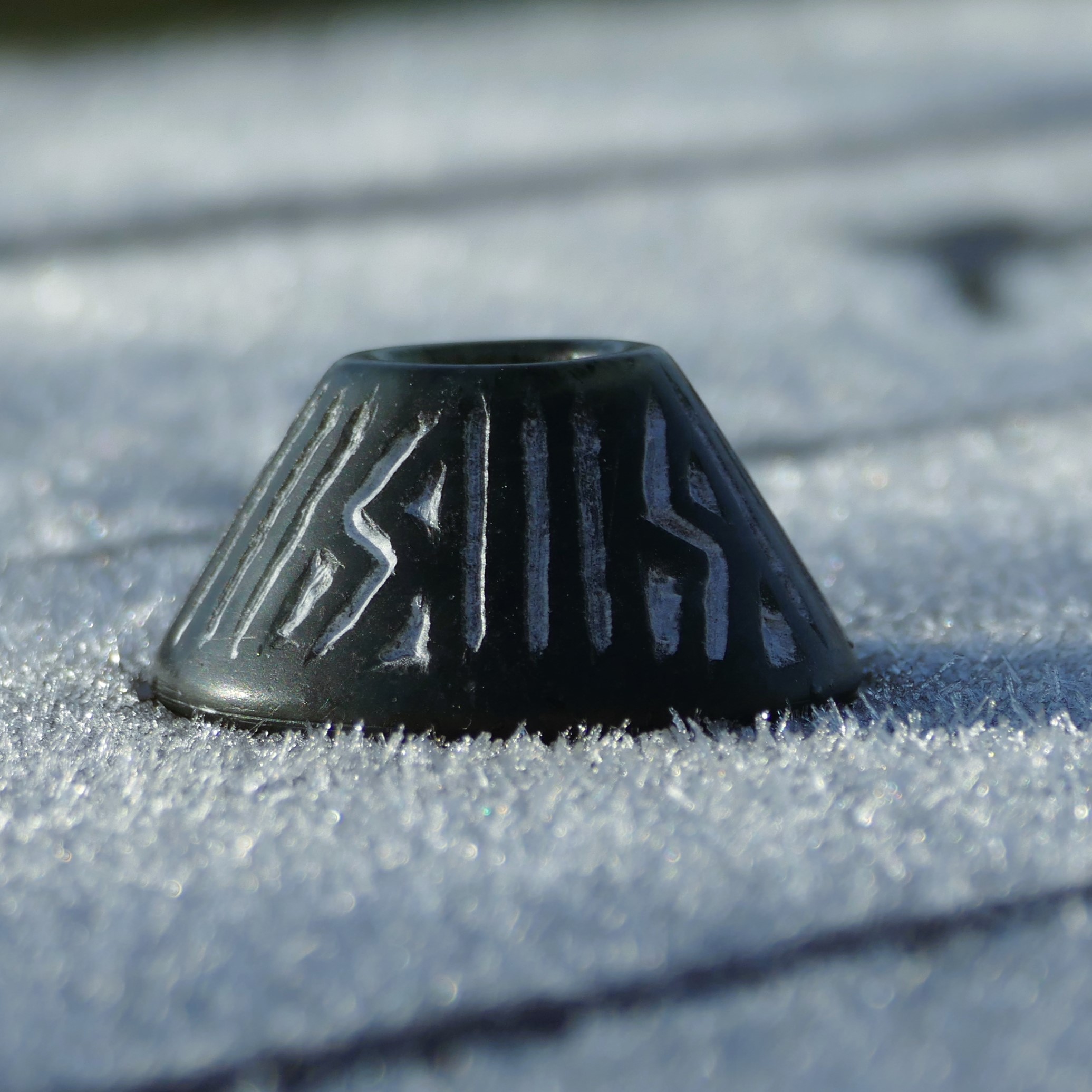
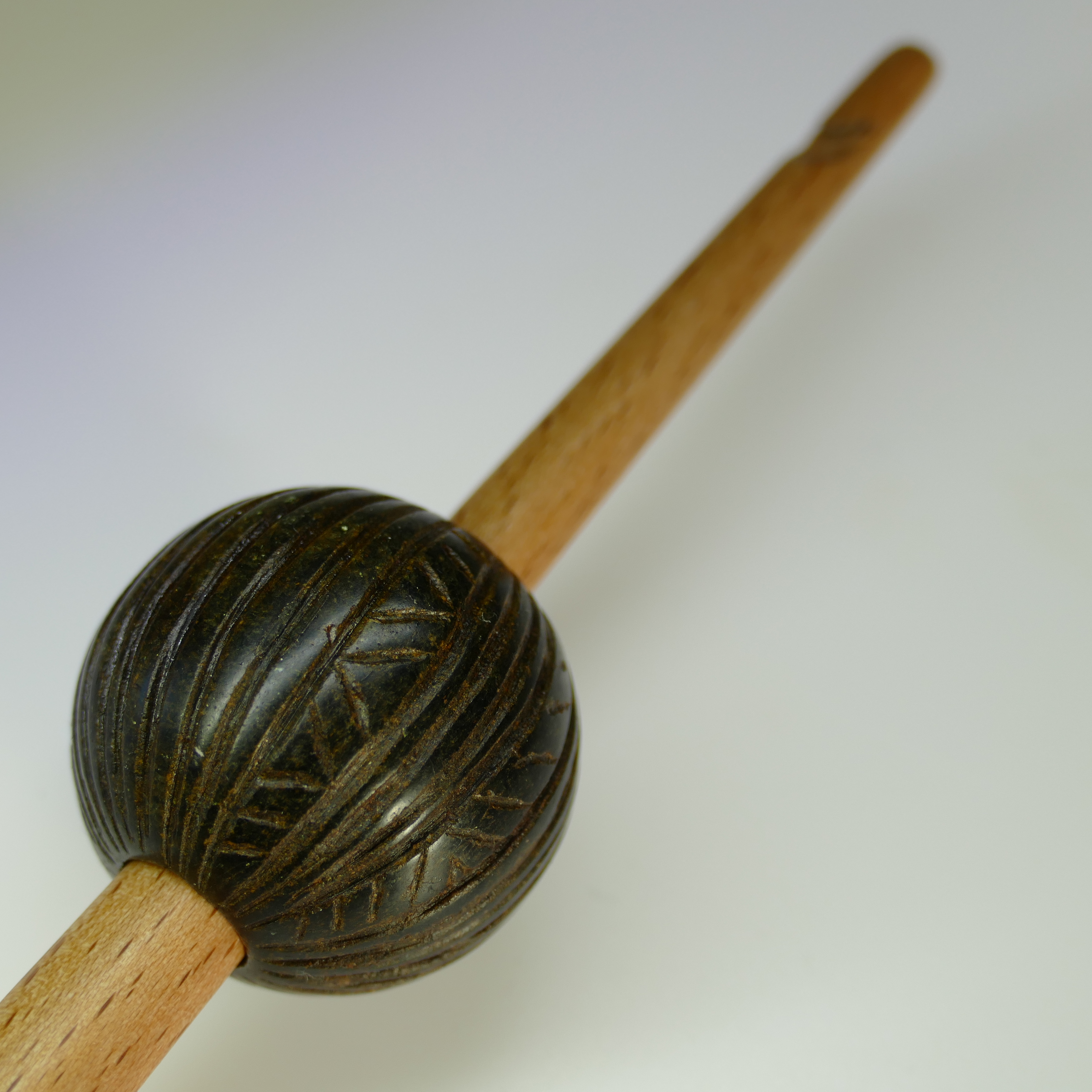
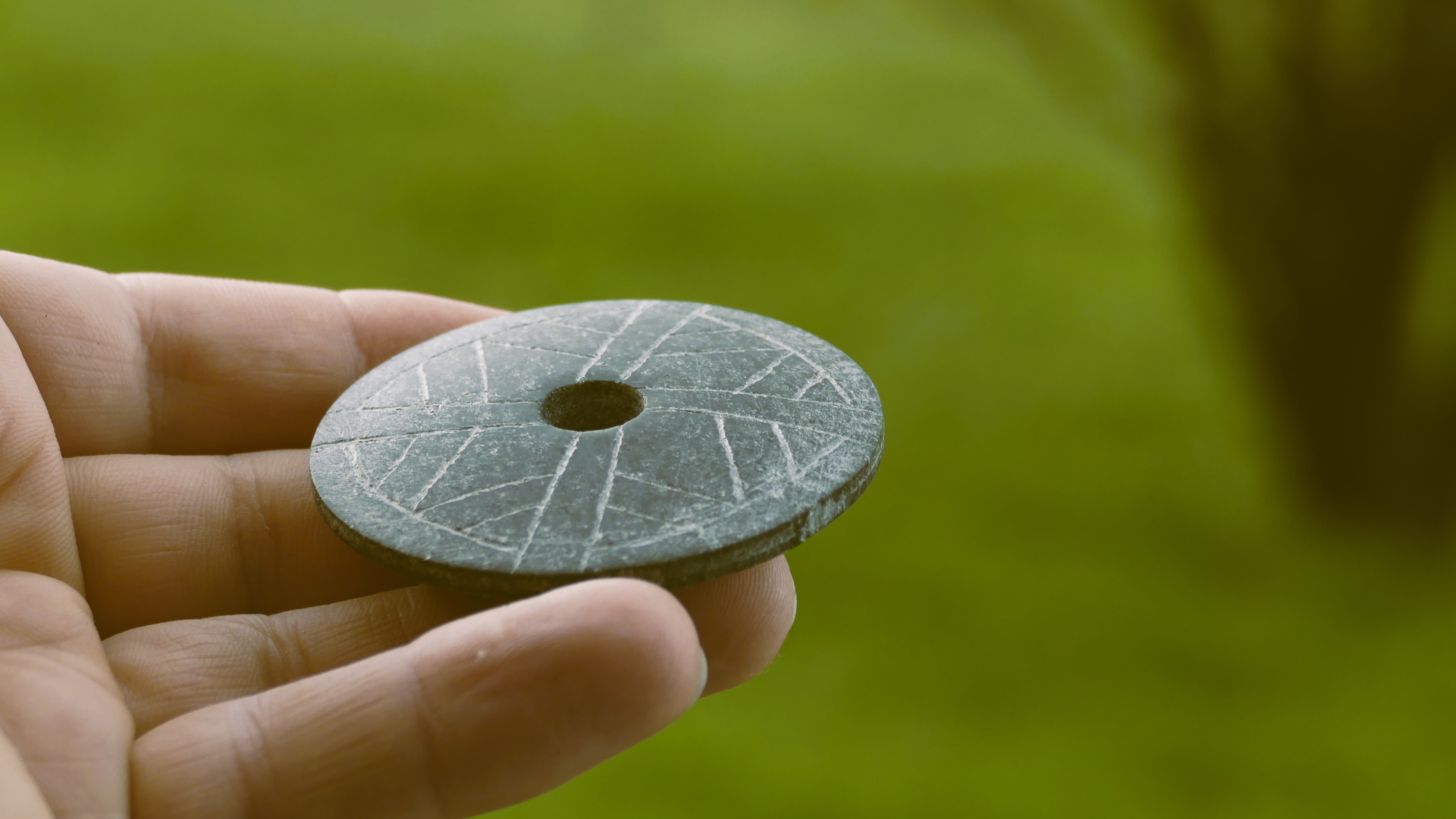
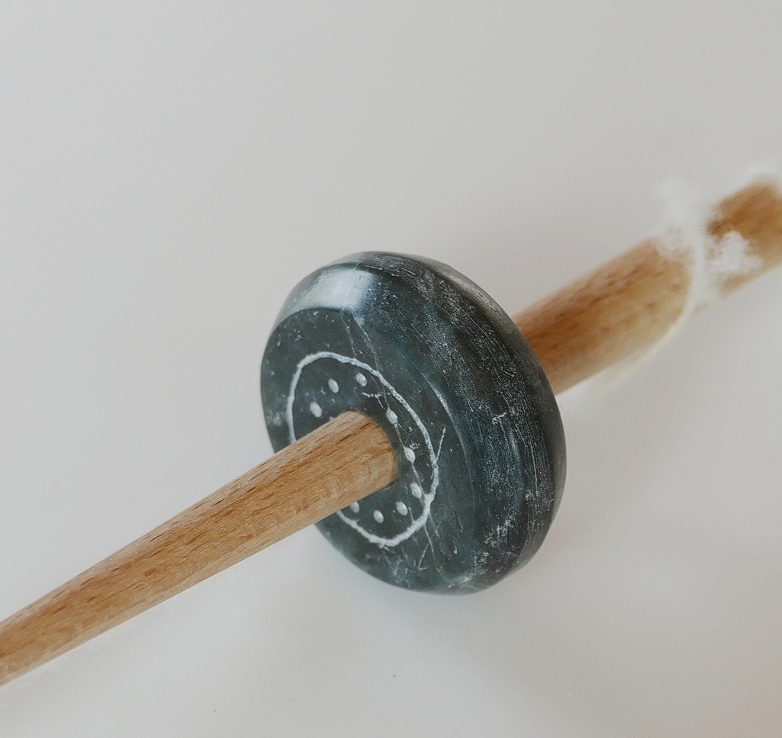
Below are some examples of my reproductions of Viking age soapstone whorls, made to the exact dimensions as the originals, in soapstone, and matching the colors of the originals as best as possible. Museum reference numbers and more photos on my FaceBook page:


prices
Prices are based on the complexity of the whorl’s design:
PLAIN: 50 euros
WITH ENGRAVINGS: 70 euros
Beech spindle stick with notch or plain: 20 euros
Beech spindle stick with reproduction metal hook: 30 euros
When ordering a soapstone spindle whorl, I just need the museum reference number of the piece you would like, or a photo or description that will let me know which one you would like reproduced.
 Helg Reproductions